
Leadership Without Borders
A journey through leadership across cultures and centuries.
Leadership Without Borders
A journey through leadership across cultures and centuries.
Today is my last day in Croatia. This afternoon, my flight leaves back to the United States.
As I pack my bags and prepare to leave, I find myself reflecting on what this two-week journey has meant. I started on August 23, 2025, with a clear purpose: to study leadership lessons across cultures and history, and to capture them in writing as part of my professional work.
Each city became both a classroom and a workspace, a place where I researched, took notes, conducted interviews, and wrote articles in real time.
My main stops along the way included: Kraków, Poland; Auschwitz, Poland; Budapest, Hungary; Vienna, Austria; Split, Croatia; Mostar, Bosnia and Herzegovina; Perast & Kotor, Montenegro; Dubrovnik, Croatia.
With a few meaningful stops in between, including Makarska and Ston, Croatia, as well as smaller towns across Bosnia and Herzegovina and Montenegro.
In total, that's six countries and about twelve cities during a two-week period, a blistering pace that demanded both focus and reflection, but also provided extraordinary perspective on leadership across borders.
As I visited these places, I continually asked myself questions about leadership practice: What lessons had we learned over time? What lessons have we still not learned? And what lessons do we need to re-learn for today?
As I studied the histories of cities, key figures, and eras of war and unrest, I discovered that not much has changed when it comes to leadership. The principles of what leaders do effectively, and ineffectively, are consistent across centuries.
Another way to put it is this: leadership has always been a tension between consciousness and unconsciousness.
In every era, conscious leaders created periods of peace and prosperity, while unconscious leaders sowed division, war, and unrest. In the 21st century or the 1st century, we are the same, only the technologies have changed.
When I set out, I didn't have a template for how I would write this series of articles. Each piece came raw, fresh, and unpolished, much like leadership itself. I didn't even have a consistent template design. Many of the articles have a different look, feel, and tone. It was an experiment, a way to process history, culture, and conscience in real time, and to share that process with others.
And as so often happens, I learned more than I could possibly teach. History itself became my classroom, offering lessons in leadership that were an extension of what I had learned in American education on world history.
The Journey
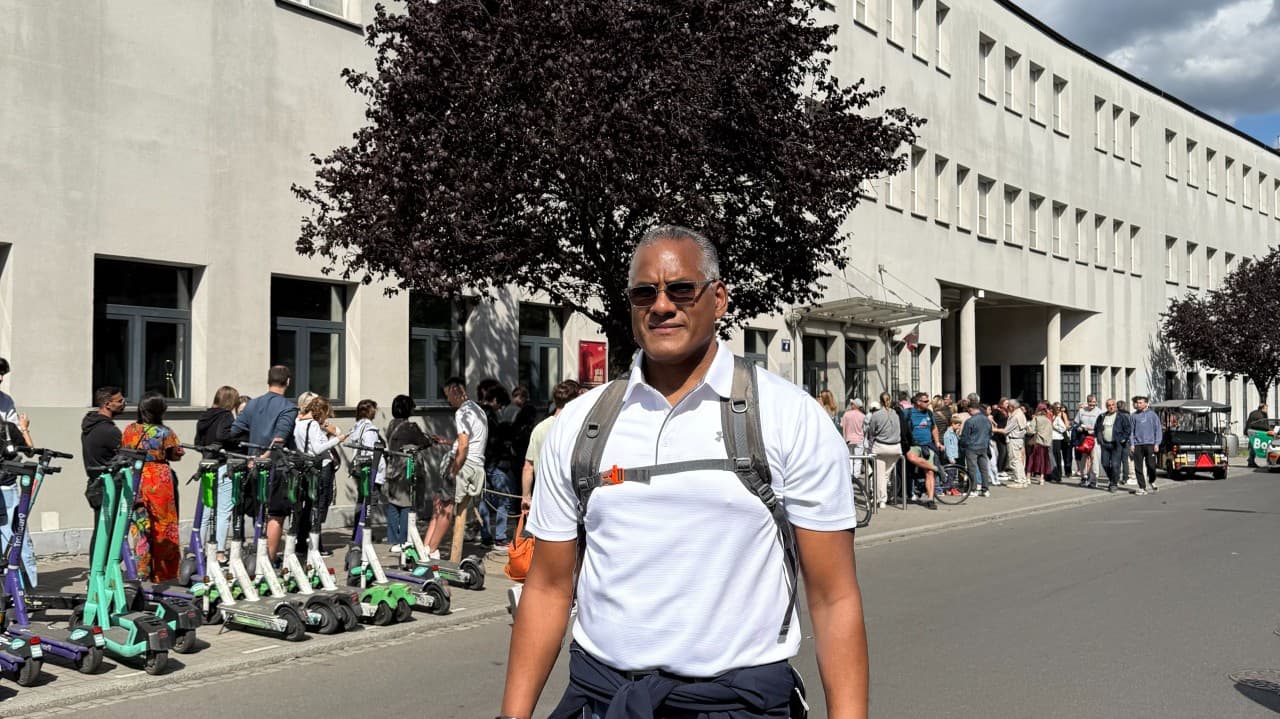
Kraków was where it began. I walked through Oskar Schindler's factory and realized that leadership is not about starting perfect, but about awakening to conscience, even late in the story.
And just outside the city, at Auschwitz, I was confronted with the opposite truth: what happens when leadership loses its soul. That experience shook me. It showed me that leadership without conscience doesn't just fail; it destroys.
In Budapest, I saw resilience. The city had been bombed in World War II, its bridges destroyed, and its neighborhoods reduced to rubble. It was first occupied by Nazi Germany, then by the Soviet Union. Yet still, Budapest stands. I crossed the Chain Bridge and felt the weight of what it means to rebuild again and again. Leadership there wasn't abstract. It was survival, persistence, and the courage to keep dignity alive when so much had been lost.
Vienna opened another layer. Beethoven taught me that limitation doesn't have to define us, it can be transcended. Mozart reminded me of how fragile genius really is, and how easily it can be consumed. Maria Theresa stood out as a leader who dared to educate children, tax the nobles, and invest in a future she would never see. Each revealed a different side of leadership: perseverance, fragility, reform, and vision.
In Split, Croatia, I walked inside the ruins of Diocletian's palace, only to discover that the people had turned an emperor's retreat into their own living city. That paradox struck me deeply. Leaders who build only for themselves leave behind empty monuments. But people, given enough time, will always reclaim and reshape what remains.
In exploring the story of Yugoslavia, I realized how fragile federations can be when identity is manipulated. Tito once held six republics together under a shared story. But when leaders like Milošević weaponized nationalism, the whole structure fractured. Learning this context helped me understand the backdrop of every Slavic country I visited, how history and memory still shape identity today.
Mostar, Bosnia and Herzegovina, along with Auschwitz, was perhaps the most sobering. Standing at the Old Bridge, I could see both the scars of its destruction and the beauty of its rebuilding. That bridge became a symbol for me: leaders can destroy trust when they weaponize identity, or they can dignify identity and create bridges that last. The choice is always theirs.
In Croatia, I reflected on Franjo Tuđman and the power of story to shape a nation's path.
In Montenegro, I learned of vladikas — warrior monks who led both in prayer and in battle, a reminder of the vigilance leaders sometimes must bear.
And then came Dubrovnik, where I walked the walls that have safeguarded freedom for centuries. Here, I realized that leadership is not just about war, but also about diplomacy, timing, and the ability to unite people around a common purpose.
The Threads That Connect
By the end of my journey, I began to see the threads that connected every stop:
Leadership without conscience leads to devastation. Freedom is fragile and must be protected. Identity can divide or dignify — depending on how leaders use it. Great leaders invest beyond themselves, into education, culture, and the daily dignity of their people.
And perhaps most of all, leaders build bridges, across differences, across generations, across divides.
Standing on the walls of Dubrovnik, looking out over the Adriatic, I realized this was not just a trip through Eastern and Central Europe. It was a journey through leadership itself.
And now, as I reflect back, I know these weren't simply European lessons. They are human lessons. Lessons for leaders anywhere who are willing to listen to history, to conscience, and to the stories of those who came before.
As David McCullough reminded us: "History shows us how to behave."
Indifference to history, he warned, is not just ignorance but ingratitude.
This journey confirmed that truth: history is not background, it is guidance. It sharpens conscience, enlarges perspective, and reminds us what leaders must stand for, and what they must never allow again.
Leadership lessons, without borders.