
The Burden of Command
Leadership in times of existential crisis.
The Burden of Command
Leadership in times of existential crisis.
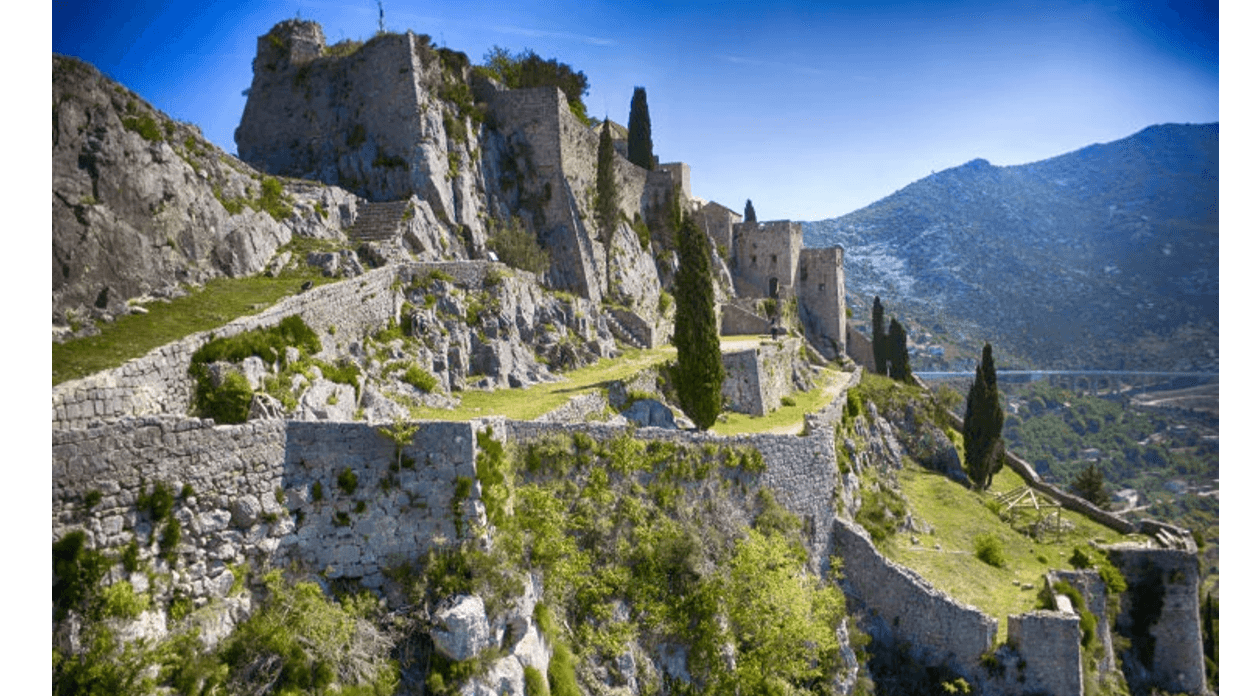
Today we traveled from Split down to Dubrovnik, with a few stops along the way. Our first was Klis Fortress, perched high above Split and the surrounding valley. The view was majestic — mountains, coastline, and the city below. Most tourists know it as a filming site for Game of Thrones, but centuries earlier it was the seat of Croatian kings. Standing there, I found myself pondering how this region, long contested and often overshadowed, shaped its own story of identity and independence. Every stone seemed to hold a memory, every view a reminder that nations are carried forward by the stories they tell about themselves. That reflection led me forward in time to the 20th century, and to one figure who embodied Croatia's modern struggle: Franjo Tuđman (pronounced FRAN-yo TOODGE-mahn).
There are faint echoes of Nelson Mandela in Tuđman's story — the militant turned prisoner turned president. But where Mandela's gift was reconciliation, Tuđman's was statehood. His courage secured Croatia's independence; his limits remind us that winning freedom is not the same as building unity.
From Village Boy to Soldier
Tuđman was born in 1922 in Veliko Trgovišće, a small village in northern Croatia. His father was active in the Croatian Peasant Party, which gave young Franjo an early sense of politics and national identity. He grew up in a Catholic, rural setting — a boy of books and discipline who excelled in school, showing early interest in history and literature.
Then war arrived. In 1941, Nazi Germany invaded Yugoslavia, creating a fascist puppet state in Croatia. At just 19, Tuđman made a choice that would define his life: he joined Tito's Partisans, the communist resistance fighting against the Axis occupiers — Nazi Germany, Fascist Italy, and their local allies in the puppet Independent State of Croatia (the Ustaše regime). From that moment, the village boy became a soldier.
General, Historian, Prisoner
Tuđman rose quickly through the Partisan ranks, fighting in Croatia and Bosnia during World War II. He was wounded in action and, after the war, stayed on in the new Yugoslav People's Army. By 1960, at just 38, he had become the youngest general in the army — a remarkable ascent that owed as much to his political reliability and intellect as to battlefield experience. His roles were often staff and political-education positions, but he received several high state decorations, including the Order of Brotherhood and Unity and the Order of Merit for the People.
Yet his path didn't end in uniform. In 1961 he requested transfer to civilian life, returning to Zagreb, Croatia's capital and cultural-intellectual center, where he turned to history. As a scholar, he argued that Croats were not just "southern Slavs" in a federation but a people with their own thousand-year story. He also challenged official communist narratives of World War II — disputing casualty counts and insisting that Croats had been unfairly maligned in Yugoslavia's version of history.
For this, he was stripped of academic position, expelled from the Communist Party, and twice imprisoned. His first imprisonment, from 1972 to 1973, came after the Croatian Spring reform movement, when he was arrested for supporting greater autonomy and served two years in prison. His second, from 1981 to 1984, was for "anti-state propaganda" after publishing abroad; he was sentenced to three years, of which he served about half. Yugoslavia's regime preferred to neutralize dissidents rather than execute them. Tuđman was troublesome, but not worth martyring. His prison years clarified rather than silenced his convictions — sharpening the sense of destiny he would later carry into Croatia's presidency.
President in Wartime
History, however, has a way of calling its own leaders forward. By the late 1980s, Yugoslavia was unraveling. Tito had died in 1980, and with him the glue of "brotherhood and unity." In his place came a rotating collective presidency — a nine-member body drawn from each of the republics and provinces, with the chairmanship passing annually from one to another. It was designed to balance the federation, but in practice it was paralyzed, unable to make decisive choices as the economy crumbled and nationalist pressures mounted.
Meanwhile, inflation soared, unemployment spread, and debt crippled the state. Into that vacuum, nationalism surged. In Serbia, Slobodan Milošević rose by consolidating power and stoking Serb nationalism. But in Slovenia and Croatia, his centralizing drive had the opposite effect: it convinced people they needed more autonomy, not less.
At the same time, communism was collapsing across Eastern Europe. The Berlin Wall fell in 1989, and one-party systems across the region gave way to democracy. Yugoslavia could not escape the tide. Under pressure, the federal authorities allowed each republic to hold multi-party elections in 1990.
In Croatia, that opened the door for Franjo Tuđman. Having spent the 1970s and 1980s as a dissident and prisoner, he stepped back into public life by founding the Croatian Democratic Union (HDZ). The HDZ tapped into a powerful current: Croats wanted both democracy and a stronger national identity. In May 1990, the party swept to victory, and Tuđman became president.
A year later, in June 1991, he declared Croatia's independence.
That decision brought war. For Milošević, it wasn't just about losing a republic — it was about losing the very foundation of his power. Roughly 12% of Croatia's population were ethnic Serbs, many living in the Krajina region. Milošević claimed they needed protection. He armed local Serb militias, who declared their own "Republic of Serbian Krajina" inside Croatia, rejecting Tuđman's authority.
It was a familiar political playbook: invoke the danger facing "our people," present yourself as their only defender, and use fear to rally discontent into obedience. History shows how often leaders have reached for this ploy — rationalizing aggression, silencing dissent, and pulling entire nations into conflict.
But this war also revealed something deeper: leadership is always an act of storytelling. Milošević told a story of grievance — one that weaponized fear and called people to become aggressors. Tuđman told a story of identity — one that anchored Croats in a thousand-year history and called them to defend their independence. The question for leaders is not whether to tell a story, but which story to tell. Stories can divide or dignify, manipulate or mobilize. The responsibility of leaders is to choose the kind of story that creates alignment without breeding destruction.
One thing I've learned in my work with Culture Partners is that stories create movement. They galvanize action. And as this history shows, the same tool can be used in opposite ways: to justify aggression and break the peace, or to summon courage and defend it. That is the responsibility of leaders — to choose stories that dignify rather than destroy.
The war that followed was brutal. Serbian forces backed by the Yugoslav People's Army (JNA) seized nearly a third of Croatian territory. Cities were shelled; Vukovar was devastated; Dubrovnik was bombarded. Tuđman held firm — pushing diplomacy abroad while organizing resistance at home, where ordinary Croats who had never even seen a gun were suddenly arming themselves to defend their towns and villages. Out of that chaos, he kept the struggle coordinated — until Croatia won international recognition in 1992 and, in 1995, regained most occupied land in Operation Storm. By the end of the decade, Croatia stood where it had not stood in centuries: independent, recognized, and whole.
For Tuđman, the struggle was about Croatia reclaiming its statehood after centuries of foreign crowns. For Milošević, it was about preserving a Yugoslavia dominated by Serbia — or, failing that, carving out a "Greater Serbia" with access to the Adriatic coast. One leader framed his people inside a thousand-year story of independence; the other stoked fear and grievance to hold territory. The collision of those two visions made war almost inevitable.
Leadership Insights
Tuđman also demonstrated how vision anchored in identity can unlock resilience. He kept telling the long story: Croats were not just Yugoslavs — they were Croats with a thousand-year history. Leaders who reconnect people to a dignifying story tap into reservoirs of strength that outlast crisis.
And here is where Tuđman joins a wider company of leaders. Martin Luther King Jr. told the story of justice so vividly from a Birmingham jail that it still moves nations. Winston Churchill, in his wilderness years and later in wartime, told the story of Britain's defiance and destiny until his people believed it. Gandhi told the story of nonviolence as a force stronger than any empire, turning fasts and imprisonments into moral theater. Mandela told the story of reconciliation instead of revenge, and it disarmed a divided South Africa.
Each was, at heart, a storyteller — choosing which narrative to give their people. Tuđman chose to tell Croats that they were heirs of a thousand-year statehood and could endure to see it reborn. The deeper question for all leaders is this: what stories are you telling to galvanize your organizational culture, and what future does it create?
History's Refiner's Fire
Franjo Tuđman turned a historian's thesis into a nation's reality. His life reminds us that many leaders are not shaped in safety but in struggle. Martin Luther King Jr.'s jail cell became a pulpit, his words in Birmingham a timeless moral summons. Winston Churchill's wilderness years forged the foresight and steel that would rally Britain in its darkest hour. Mahatma Gandhi's imprisonments and fasts transformed protest into spiritual discipline, giving nonviolence irresistible force. Nelson Mandela's decades in prison refined bitterness into reconciliation, preparing him to heal a divided South Africa. Franjo Tuđman's imprisonment clarified his conviction that Croats carried a thousand-year story — one he would fight to make real.
The pattern is unmistakable: the refiner's fire of opposition forges clarity of purpose. Not sainthood — all were imperfect. But tested by fire, they elevated people beyond themselves, galvanizing entire nations toward visions greater than any one individual.
A leader shaped by history can, in turn, shape history — but only humility can shape what comes after.