
When Leadership Loses Its Soul
Reflecting on the darkest moments of human history.
When Leadership Loses Its Soul
Reflecting on the darkest moments of human history.
Eighty years later, Auschwitz still warns us what happens when leadership abandons its moral compass and when fear becomes the culture.
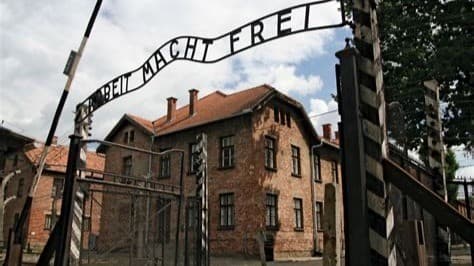
Yesterday, I stood at Schindler's factory in Kraków — a place where one man's awakening saved more than a thousand lives. Today, an hour away, I walked through Auschwitz — a place where the absence of such conscience allowed millions to perish.
Liberated on January 27, 1945, Auschwitz is not a place you walk through casually. Its silence still speaks. It is a name synonymous with horror — a reminder of what happens when leadership abandons its moral compass and when fear becomes the culture.
Walking through its gates is sobering. To walk freely today between these barracks of death is to feel the weight of what once happened here. The unlivable spaces. The overcrowding. The dreaded roll calls where inmates stood in formation for hours in the freezing cold. The reducing of human beings — who once had hopes, aspirations, and dreams — to tattooed numbers on their arms, making it easier to dehumanize them during "The Selection," when life or death was decided in a single moment.
A Brief Timeline
1940 – Auschwitz established as a concentration camp. 1941 – Auschwitz II–Birkenau constructed, soon becoming the main site of extermination. 1942–1944 – Peak deportations; more than a million Jews transported and murdered. January 27, 1945 – Soviet troops liberate Auschwitz; about 7,000 prisoners remain alive.
The weight of these dates is staggering. They mark the machinery of death that unfolded step by step — built with cold, calculated efficiency. Even those carrying out atrocities had to numb themselves, compartmentalizing horror in the name of obedience to the so-called "Final Solution."
Leadership Insight
In my work with CEOs and executive teams, I often see the quiet damage fear creates inside organizations. It does not compare — not remotely — to the atrocities of Auschwitz. And yet, fear as a cultural force has always been destructive. It silences voices, breeds complicity, and normalizes what should never be normal.
When I coach these leaders, I avoid labeling them as "good" or "evil." More often, they are simply unconscious — not fully self-aware of the impact of their behaviors. And yet, their unconscious leadership can cause incredible damage. Ironically, I find they are often just as afraid as everyone else, but they have never learned how to self-regulate. At times, even their temperamental rants look less like aggression and more like unarticulated pleas for help.
And sometimes, leaders are fully aware of their behavior, but they don't know another way. They cling to control, believing it to be real, when in truth control is an illusion. Too attached to outcomes — a trap warned of in ancient texts like the Bhagavad Gita — they fight against the present moment. Fearful of consequences, they lean on dangerous words like "should" and "shouldn't":
"This shouldn't have happened." "You should be farther along in this project."
These words create suffering. They don't change reality — they resist it.
What I often counsel leaders is this: Where you "should" be is where you are.
Wisdom begins with acceptance of the present moment, acknowledging the realities that currently exist, without judgment or blame. From there, acknowledge your own contribution to the circumstances (personal ownership) and then ask the question that creates accountability: "What else can we do?" And then act.
This shift — from resisting reality to accepting and owning it — is not just a modern leadership technique. It is deeply aligned with Viktor Frankl's insight that even in suffering, we hold the freedom to choose our response. As a survivor of Auschwitz and Dachau, Frankl wrote:
""Everything can be taken from a man but one thing — the last of the human freedoms — to choose one's attitude in any given set of circumstances, to choose one's own way."
In my work, I use a framework called the SOSD Accountability Tool from Culture Partners, which helps leaders and teams move out of defeatist victimhood and into ownership. At its core, it's the same principle Frankl revealed: that we can't always control our circumstances, but we can always choose our response.
Culture Application
What Auschwitz makes painfully clear is this: culture is leader-led.
Leaders set the tone — whether fear or trust, dignity or degradation. Fear-based cultures may achieve compliance, but they will never inspire courage. When fear is allowed to dominate, atrocity can be normalized.
The stakes may be different in today's boardrooms, but the principle remains: culture is fragile, and fear destroys it.
Takeaway
Auschwitz is not a place of inspiration. It is a place of mourning. But even here, there is a leadership lesson — one that warns us what happens when leaders abandon conscience, when cultures bend to fear, and when human dignity is discarded.
Eighty years later, we carry the responsibility to lead differently. To shape cultures of courage, not compliance. To create trust, not fear. To never forget that leadership is not just about results — it is about the humanity of the people we lead.
When leadership loses its soul, fear takes its place. Our responsibility is clear: lead with integrity, courage, and dignity — always.