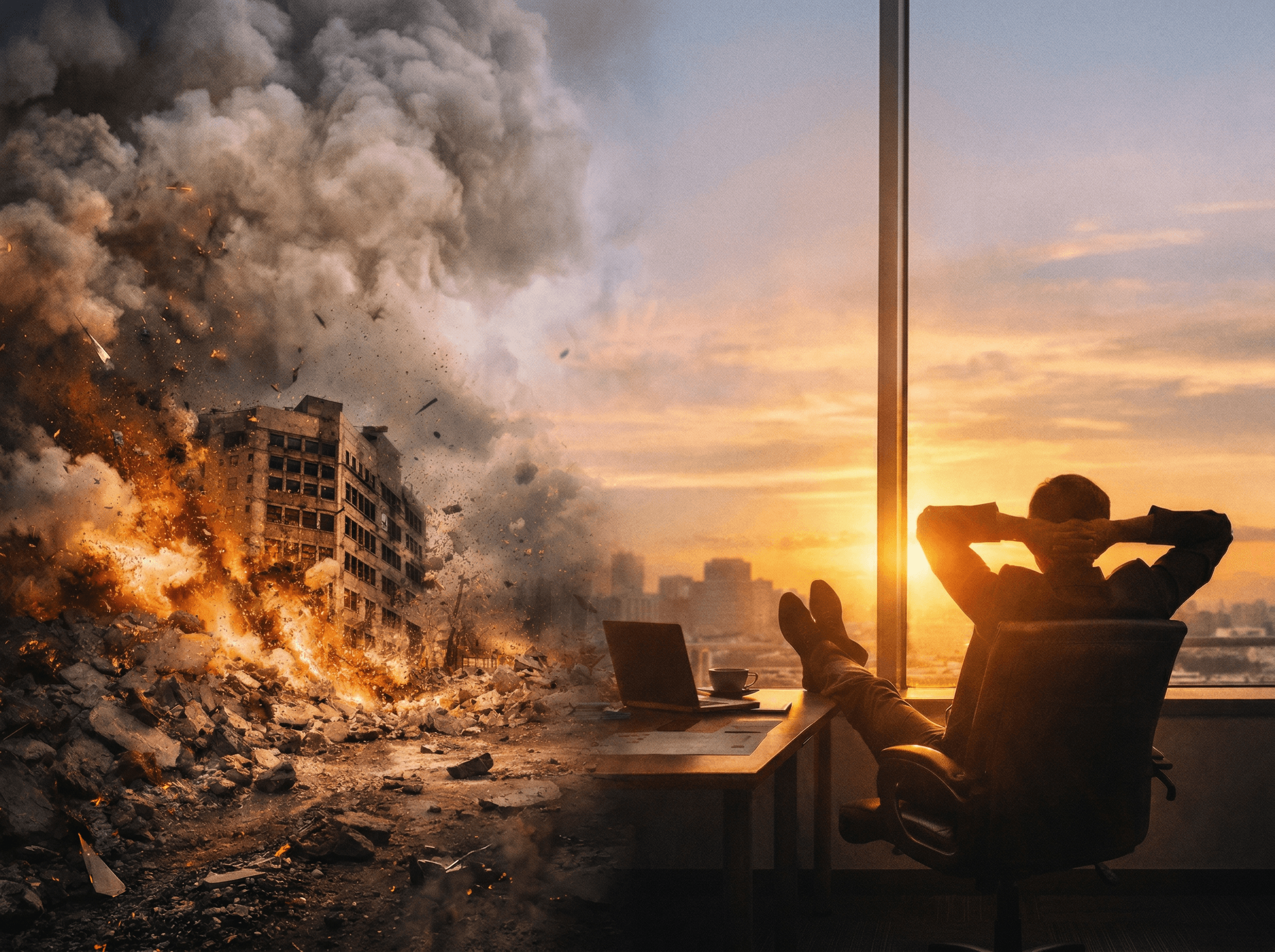
Leaders often assume culture fails in moments of crisis. In practice, culture is usually strongest when stakes are high and attention is focused. What undermines culture far more often are the quieter moments, when decisions feel reasonable, isolated, and expedient.
Leaders often assume culture fails in moments of crisis. In practice, culture is usually strongest when stakes are high and attention is focused. What undermines culture far more often are the quieter moments, when decisions feel reasonable, isolated, and expedient.
I have spent close to fifteen years working with leaders across the Asia Pacific region, supporting organizations as they translate strategy into execution through culture. I have done similar work in North America, Europe, the Middle East, Africa, and Latin America.
What follows is not an indictment of any region. It is an observation about human systems under pressure.
Across geographies and industries, leaders often assume culture fails in moments of crisis. In practice, culture is usually strongest when stakes are high and attention is focused. What undermines culture far more often are the quieter moments, when decisions feel reasonable, isolated, and expedient.
Because these moments rarely feel consequential on their own, their impact is easy to underestimate.
Most culture failures are not explosive. They are erosive.
Explosions get attention.
Erosion gets rationalized.
That is why culture does not collapse in moments of crisis. It erodes in moments of convenience.
Erosion happens gradually, through small repeated choices. What feels like a reasonable exception in the moment quietly compounds over time, where one exception becomes a precedent.
One "just this once" becomes policy.
One protected high performer becomes permission.
One unchallenged compromise becomes culture.
There are no alarms and no headlines. What follows instead is a slow loss of trust, energy, and ownership. Leaders are often surprised when performance eventually drops.
It was not sudden.
It was cumulative.
Crisis does not collapse culture.
It reveals it.
Under stress, cognitive bandwidth narrows. Fear activates survival patterns. Leaders reach for the fastest lever of compliance, which is almost always fear. This is not a moral failure. It is a human reflex.
What crisis triggers is behavioral regression, not cultural erosion.
Crisis moments perform an important function. They expose the true depth of Cultural Belief internalization. They reveal what leaders actually trust when they are afraid.
A leader yelling in a crisis is not evidence that culture has already eroded. It is evidence that the desired belief has not yet been fully integrated under pressure.
So where does erosion actually occur?
Erosion does not take place when leaders are overwhelmed or under threat. It takes place in moments of convenience, where there is time, choice, and discretion, and where leaders decide what to press, what to postpone, and what is not worth the cost.
Crisis moments are acute.
Convenience moments are chronic.
Crisis-driven fear is visible, temporary, and explainable.
Convenience-driven compromise is invisible, ongoing, and cumulative.
Fear in crisis says, "I do not feel safe right now."
Convenience says, "This is not worth the cost."
That is why erosion lives in convenience, not crisis.
Crisis behaviors reveal capacity. Convenience choices determine trajectory.
Erosion occurs when fear-based behavior goes unexamined, uncorrected, and unlearned once the crisis passes.
What leaders consistently reinforce or ignore after pressure subsides is exactly what trains Cultural Beliefs.
Cultural Beliefs are timely by design. They are intentionally defined and prioritized to support the organization's current strategy, pressures, and required results. They represent a conscious leadership choice. They are a strategic bet that if these beliefs are broadly adopted and consistently lived, the organization will achieve what it has set out to do.
Cultural Beliefs ultimately determine what people actually do.
Leaders often declare Cultural Beliefs explicitly. When those stated beliefs are not consistently lived, enforced, or protected, a different set of beliefs is earned through repeated leadership behavior.
Over time, people learn beliefs such as:
These are not the beliefs leaders intended to create. They are learned through experience.
This is why culture does not erode because beliefs were unclear. It erodes because people accurately learn what is actually safe, rewarded, or ignored in practice.
Values tend to anchor identity over time.
Cultural Beliefs power execution in the present.
Cultural Beliefs only become real when leaders are willing to protect them in practice.
The danger is failing to budget for the cost of enforcing them.
When the price of consistency feels higher than the price of compromise, people notice. They adapt accordingly.
The performance consequences are predictable.
When Cultural Beliefs are lived:
When Cultural Beliefs are announced but not enforced:
Cultural Beliefs do not erode because leaders fail once. They erode because small compromises go unexamined and unchallenged.
Declaring a standard of Cultural Beliefs sets an expectation.
Refusing to pay its price destroys credibility.
The essential insights from this article.
Culture does not collapse in moments of crisis — it erodes in moments of convenience, through small repeated choices that compound over time
Crisis behaviors reveal capacity; convenience choices determine trajectory — erosion happens when fear-based behavior goes unexamined after pressure subsides
Culture does not erode because beliefs were unclear — it erodes because people accurately learn what is actually safe, rewarded, or ignored in practice
Cultural Beliefs only become real when leaders are willing to protect them in practice — when the price of consistency feels higher than compromise, people adapt accordingly
Explore more insights on leadership, transformation, and organizational effectiveness. Each piece is designed to challenge your thinking and provide practical frameworks for navigating complexity.
