
Fragments of Unity
The rise and fall of a unified vision.
Fragments of Unity
The rise and fall of a unified vision.
This article will veer a bit from the others in this series. Instead of centering on one leader or one city, the lessons here come more from regional history — from the way an entire federation was held together and then came apart. Three figures shape this story: Joseph Stalin, who tried to pull Yugoslavia into the Soviet orbit; Josip Broz Tito, who defied him and built a federation of six republics; and Slobodan Milošević, whose nationalist gamble helped tear that federation apart.
For those who know this history well, much of what follows may feel like review. My intent is not to surprise the expert, but to share how I, as an American traveling through Croatia, am seeing these events up close and personal for the first time — and what they reveal about leadership today.
When I was growing up, I saw Yugoslavia on Olympic scoreboards, listed right alongside the US, France, Germany, and Italy. To me, it was just another country — one name, one flag, one team.
What I never realized at the time was that Yugoslavia was not a single nation, but a federation — six republics bound together after World War II under the leadership of Josip Broz Tito: Slovenia, Croatia, Bosnia and Herzegovina, Serbia, Montenegro, and Macedonia (today North Macedonia). Within Serbia, there were also two autonomous provinces: Kosovo and Vojvodina.
Croatia was one of those republics. Its people had their own history, culture, and identity, but for nearly five decades they shared a government in Belgrade, carried Yugoslav passports, sent athletes to compete under a single flag, and navigated life within a system that tried to balance six different nations inside one federation.
Of course, I understand that today. But what I hadn't appreciated until being here is the texture of those dynamics — how people remember what it meant to live inside that federation, and how the fractures of the 1990s are still within living memory. It's one thing to know the republics on a map; it's another to hear Croatians describe how those years shaped their families, their towns, and their sense of identity.
Tito's Defiance and Distinct Path
Tito himself was a remarkable figure — a guerrilla commander during World War II who led the Yugoslav Partisans, a resistance movement that fought both the Nazis and domestic Nazi collaborators. Unlike many occupied nations that waited for liberation, the Partisans organized their own army, waged a relentless guerrilla campaign, and by war's end had liberated much of the country themselves. What made the Partisans unique was their multi-ethnic character: Croats, Serbs, Bosniaks, Slovenes, Montenegrins, and Macedonians all fought together under Tito's banner of "brotherhood and unity" — at a time when other resistance groups often fought only for one ethnicity over another.
That inclusivity gave Tito enormous legitimacy after 1945, when the old Kingdom of Yugoslavia was abolished and he established the Socialist Federal Republic of Yugoslavia — a new communist federation of six republics that he insisted would not be dictated by Moscow.
This was the Yugoslavia I grew up with, the one I saw on Olympic scoreboards. It would last nearly half a century, until its breakup in the early 1990s.
But before it unraveled, Tito faced a crisis much earlier. In 1948, he openly broke with Stalin — the only communist leader in Eastern Europe to defy Moscow. Stalin did not take it lightly. Trade was cut off, propaganda poured in, and whispers of invasion grew louder. Pro-Soviet factions inside Yugoslavia were purged, with thousands sent to prison camps like Goli Otok. For a time, Red Army troops massed near the border, and many believed war was inevitable.
But Stalin never moved to attack. Yugoslavia's rugged terrain, Tito's reorganized army, and quiet support from the West made the price of invasion too high. Against the odds, Tito survived saying "no" to Stalin — something almost no one else in the communist world could do. Stalin blinked.
For Croatians, this meant their culture and identity breathed a little freer than if Stalin had succeeded in taking over the Yugoslav federation. They were still inside a communist system, but not under Moscow's iron grip. In practical terms, life in Yugoslavia allowed more breathing room than in the USSR. People could travel abroad, especially as "guest workers" in Western Europe. Western products like Coca-Cola and Levi's were available in shops. Rock music, Hollywood films, and foreign books circulated more openly. Small private businesses were tolerated, and workers' councils gave some autonomy in factories.
That difference still echoes today in how Croatians tell their story:
""We were never the USSR. We were Yugoslavia."
Now, standing here in Croatia, I'm inside one of the historic nations of this region — hearing the language, walking the streets, and seeing firsthand the context textbooks back home never gave me. I've spent much of my career working in Asia and the Middle East, so Mandarin, Bahasa, and Arabic are familiar rhythms to my ear. I've lived in Italy and worked across Western Europe, where French, German, and Italian feel part of my landscape. But here, the Slavic language is unfamiliar — energetic, animated, with a sing-song quality not unlike Italian. It reminds me how distinct this region is, even within Europe.
The Gamble of Division
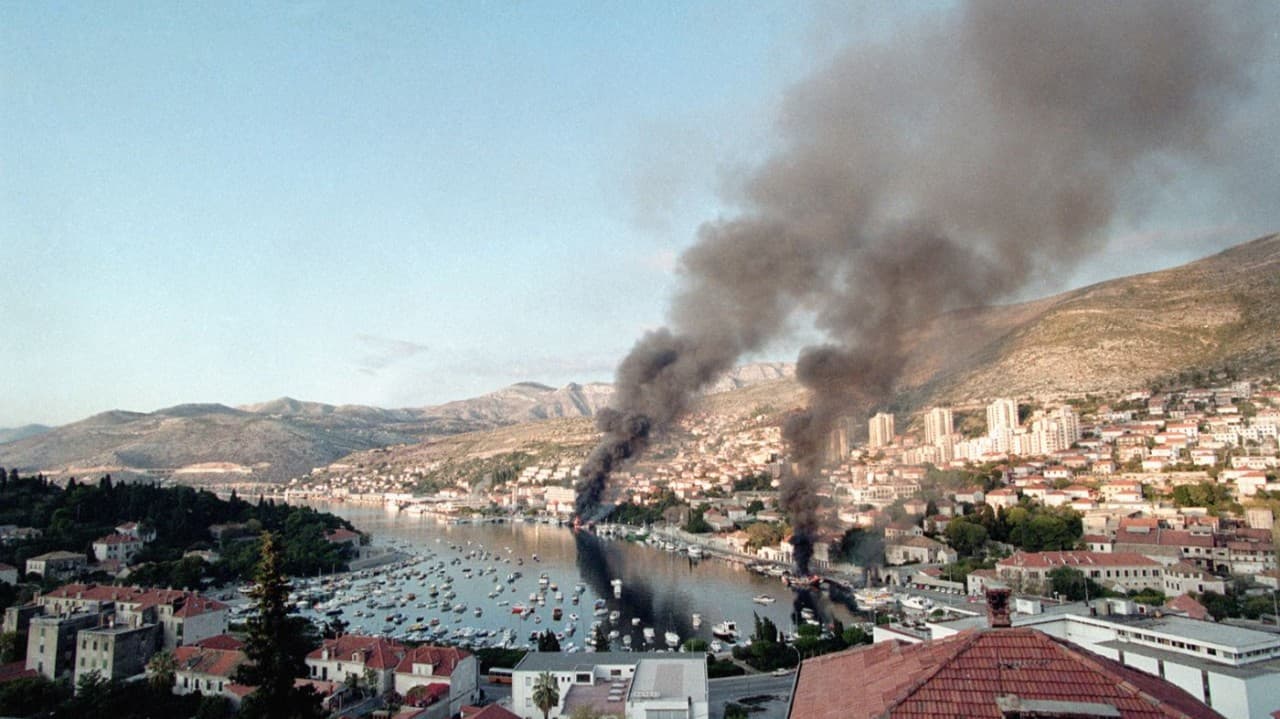
That distinctiveness made Yugoslavia strong — and fragile. By the 1990s, after Tito's death and amid growing economic strain, old nationalisms resurfaced. In Belgrade, Serbian leader Slobodan Milošević fueled a dream of a "Greater Serbia." His government armed Serb militias in Croatia, who declared breakaway zones and expelled Croats from their homes. Towns were shelled, Dubrovnik was bombarded, Vukovar was destroyed.
The gamble ultimately failed — Serbia lost influence, territory, and even Kosovo. But the human cost was immense, paid in valleys such as those in Croatia's Lika region, where Catholic Croats and Orthodox Serbs who had once lived side by side were suddenly on opposite ends of barricades. In the end, Milošević himself was forced from power, arrested, and sent to The Hague to stand trial for war crimes — a stark reminder that leaders who gamble on division may gain power for a season, but history often calls them to account. Driving through that valley today, I could still see the abandoned houses and empty fields left behind by those years.
And that is the sobering truth: these were not ancient hatreds. These were divisions stirred from political and government powers — leaders who chose to manipulate identity for gain. Ironically, the lesson keeps repeating across history: whenever groups are dehumanized, lumped together, and despised as a collective, the results are predictable — division, suffering, and loss.
Leadership Insights
From a distance, Yugoslavia looked like just another communist state. Up close, it was something else entirely — a federation of nations, each with its own identity, culture, and aspirations. Leaders face the same reality. Categories and labels rarely tell the whole story. When executives assume all competitors are alike, all employees want the same things, or all markets behave the same way, they flatten reality — and miss what matters most.
And sometimes the danger is greater. Whenever leaders use identity — religion, ethnicity, class, or party — as a wedge, they put whole communities at risk. History shows how quickly fear can be stirred and trust destroyed when differences are exaggerated.
The warning is clear: wise leadership doesn't weaponize identity; it dignifies it. It doesn't fracture people; it forges trust across lines of difference. That's as true in organizations as it is in nations.
Closing Reflection
When I was younger, I saw Yugoslavia on Olympic scoreboards and assumed it was a single, unified country. Now I understand how misleading that was. What looked unified from a distance contained deep differences on the inside.
Leaders face the same reality. Categories and labels rarely tell the whole story. Leaders who take the time to understand differences — and lead with that awareness — make better decisions, earn greater trust, and build stronger cultures.