
Walking the Walls of Freedom
Walking the walls of freedom in Dubrovnik.
Walking the Walls of Freedom
Walking the walls of freedom in Dubrovnik.
At the end of my two-week odyssey visiting six countries I had never visited before, our final stop before heading home brought us to the walled city of Dubrovnik.
As with every city on this trip, I entered with virgin eyes. I had never walked these streets, never seen these walls, and knew little of the history or the people who built them. What I found was the final gift of this journey — a story of survival, freedom, and leadership carved into stone.
I also couldn't help but notice another layer of its fame: Dubrovnik was a principal filming location for Game of Thrones. Though I've never seen the series, I could overhear surrounding tour guides pointing out sites where scenes were filmed, and it was clear how much tourism has surged because of this show.
Dubrovnik's story begins in the 7th century, when Slavic tribes swept into Dalmatia, destroying the Roman city of Epidaurum (modern Cavtat). Roman refugees fled to a rocky islet called Laus, while Slavic settlers established Dubrava ("oak grove") nearby. At first divided by a marsh, the two communities eventually filled it in — creating today's Stradun, the city's marble-like main street. From this unlikely merger grew the Republic of Ragusa, a maritime republic that lasted centuries.
Fort Lovrijenac — Freedom Above Gold
Perched high on a cliff, Dubrovnik's Gibraltar stands guard. Above its gate is inscribed the city's motto:
""Freedom is not sold for all the gold in the world."
It is a bold reminder that some values are too precious to trade away, no matter the reward. For leaders, that's the power of defining culture. When an organization's vision, purpose, priorities, and cultural beliefs are clear, they become the north star. Leaders who abandon them in pursuit of every new bright object — whether it's the latest business book fad, a flashy consultant framework, or a competitor's quick-fix strategy — risk losing the very soul of their culture. Flexibility is vital, but so is fidelity.
Stradun — Turning Division into Connection
From the fort, we stepped onto the Stradun, the wide limestone boulevard that gleams under the sun. Hard to imagine that this elegant promenade began as a swamp that divided two communities.
By filling it in, leaders of the past turned a fault line into the city's central artery. That act redefined their identity: no longer two separate peoples, but one. Much like what we saw in the history of Budapest, these themes repeat across cultures — bridges built, roads connected, divisions transformed into unity.
The same is true in leadership: identity is first clarified inward, then extended outward. Leaders who reconcile their own inner divides are the ones most capable of building bridges in their organizations and communities.
Rector's Palace — Stewardship, Not Possession
Our next stop was the Rector's Palace, seat of the Republic's government. The Rector was elected for only one month and confined to the palace during his term, allowed to leave only for official duties.
Power here was intentionally temporary, borrowed rather than owned. It was a system designed to prevent corruption, but also a statement that leadership was stewardship.
Too often today, leaders confuse themselves with their titles. The palace whispers a different lesson: when leaders separate who they are from the role they occupy, they are freer to serve. Leadership is not the "because I said so" exercise of authority. It is about creating experiences that build trust. When mistakes happen — as they always do — they are not personal failures of the leader's ego, but moments to guide, to bridge gaps, and to strengthen culture.
The City Walls — Perspective Inward and Outward
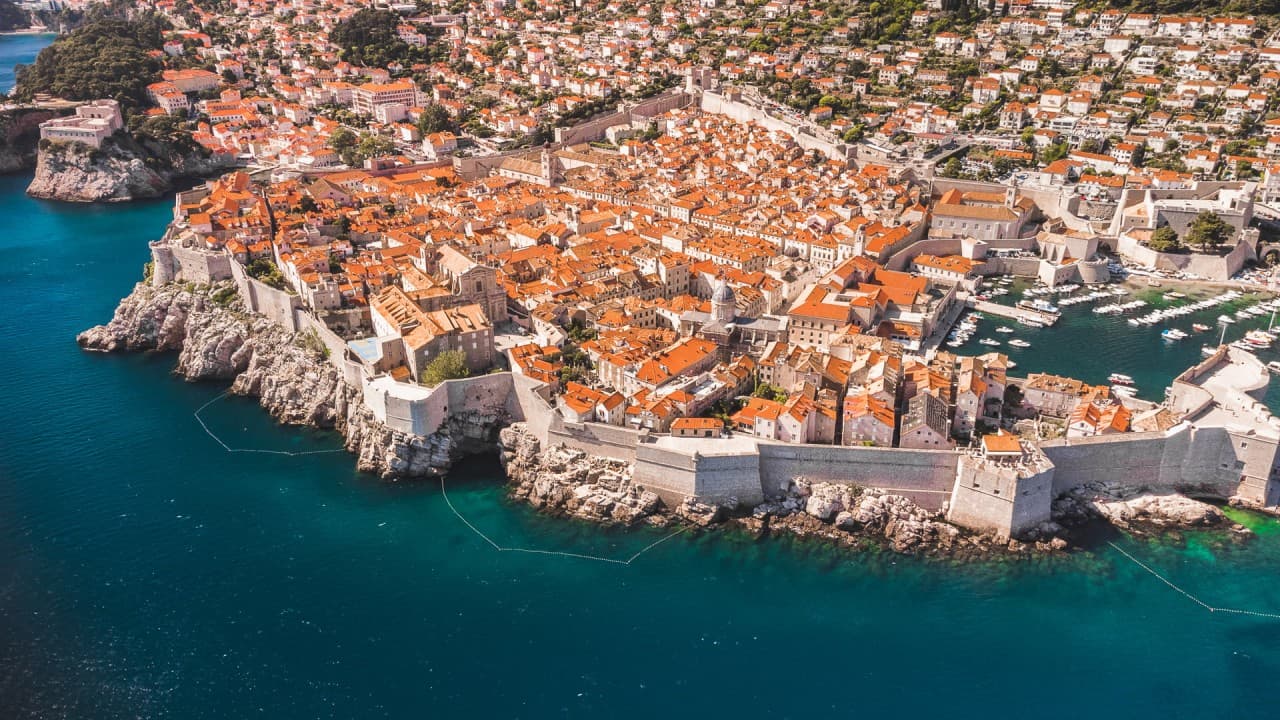
Finally, we circled the city itself, walking the walls of Dubrovnik — two kilometers of stone that once safeguarded freedom against every storm.
From atop, the view stretched outward to the Adriatic, where enemy ships could be spotted long before arrival, and inward to the red rooftops of a thriving culture.
Standing on those walls, I thought of how perspective saves. Dubrovnik survived because it could see far ahead. Leadership today demands the same: the outward vision to anticipate threats, and the inward vision to nurture culture, dignity, and trust.
Other landmarks caught our eye — Onofrio's Fountain, which carried fresh water into the city; the Church of St. Blaise, whose golden statue still holds Dubrovnik in his hand; the Sponza Palace, where archives preserved memory; and the Cathedral, which rose from the ruins of earthquake and war. Each is a chapter in the story of resilience.
Closing Reflection
As we finished our 360° walk of the walls, I realized Dubrovnik's greatest lesson: walls can be prisons, or they can be protectors. These were built not to trap people, but to safeguard freedom so that culture could flourish inside.
❓ What walls are you building as a leader — ones that confine, or ones that protect the conditions for people to thrive?