
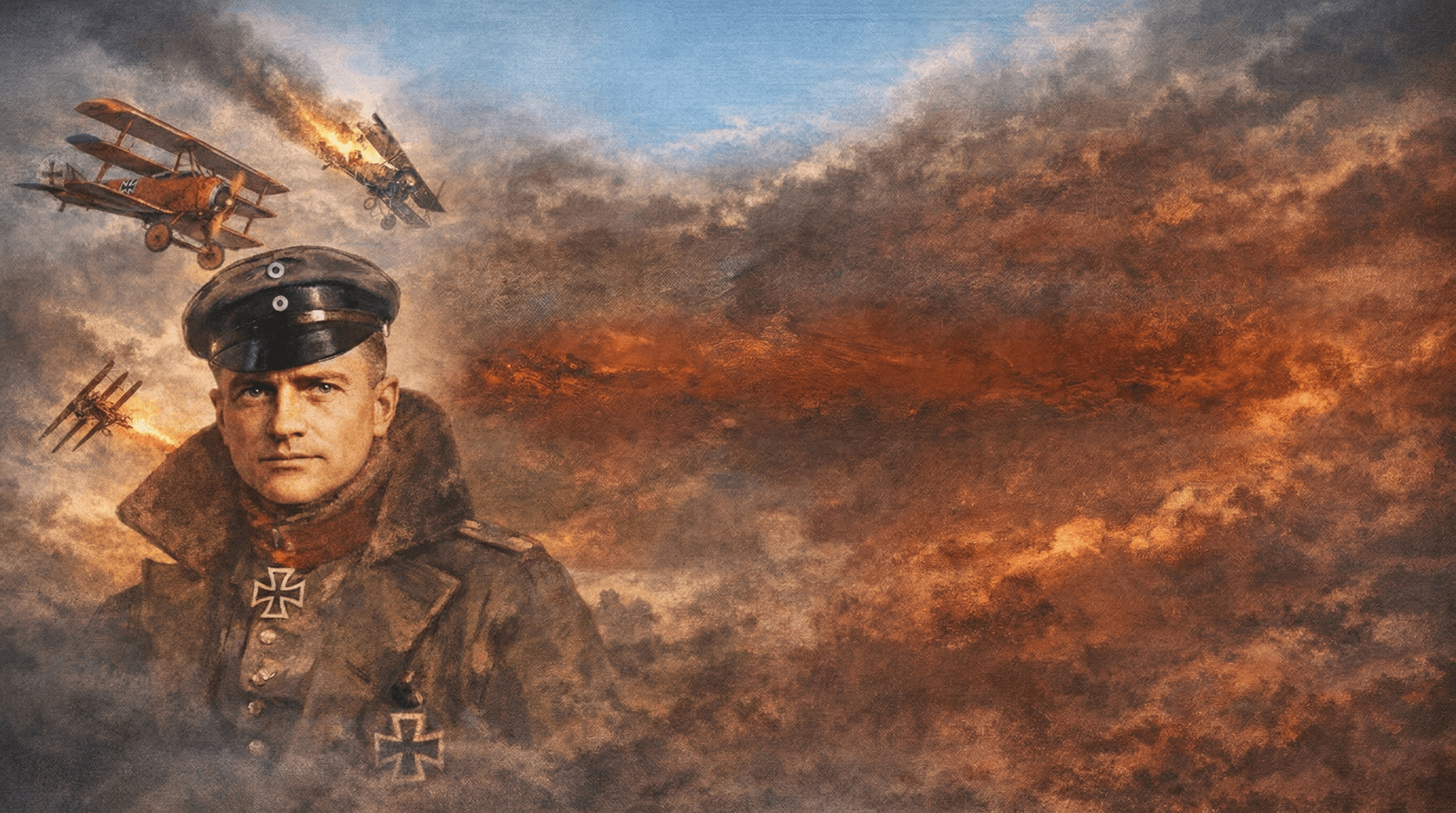
Leadership Lessons of the Bloody Red Baron
What World War I fighter pilots can teach today's leaders about goal fixation, awareness, and the moment success becomes identity.
Leadership Lessons of the Bloody Red Baron
What World War I fighter pilots can teach today's leaders about goal fixation, awareness, and the moment success becomes identity.
When Goal Fixation Becomes Identity
Late last year, my wife and I visited the National WWI Museum and Memorial in Kansas City. One gallery displayed World War I fighter pilots alongside their confirmed aerial victories. At the top were some of the most legendary aviators of the war:
- Manfred von Richthofen ("The Red Baron"), 80 victories.
- René Fonck, 75.
- Billy Bishop, 72.
- James McCudden, 57.
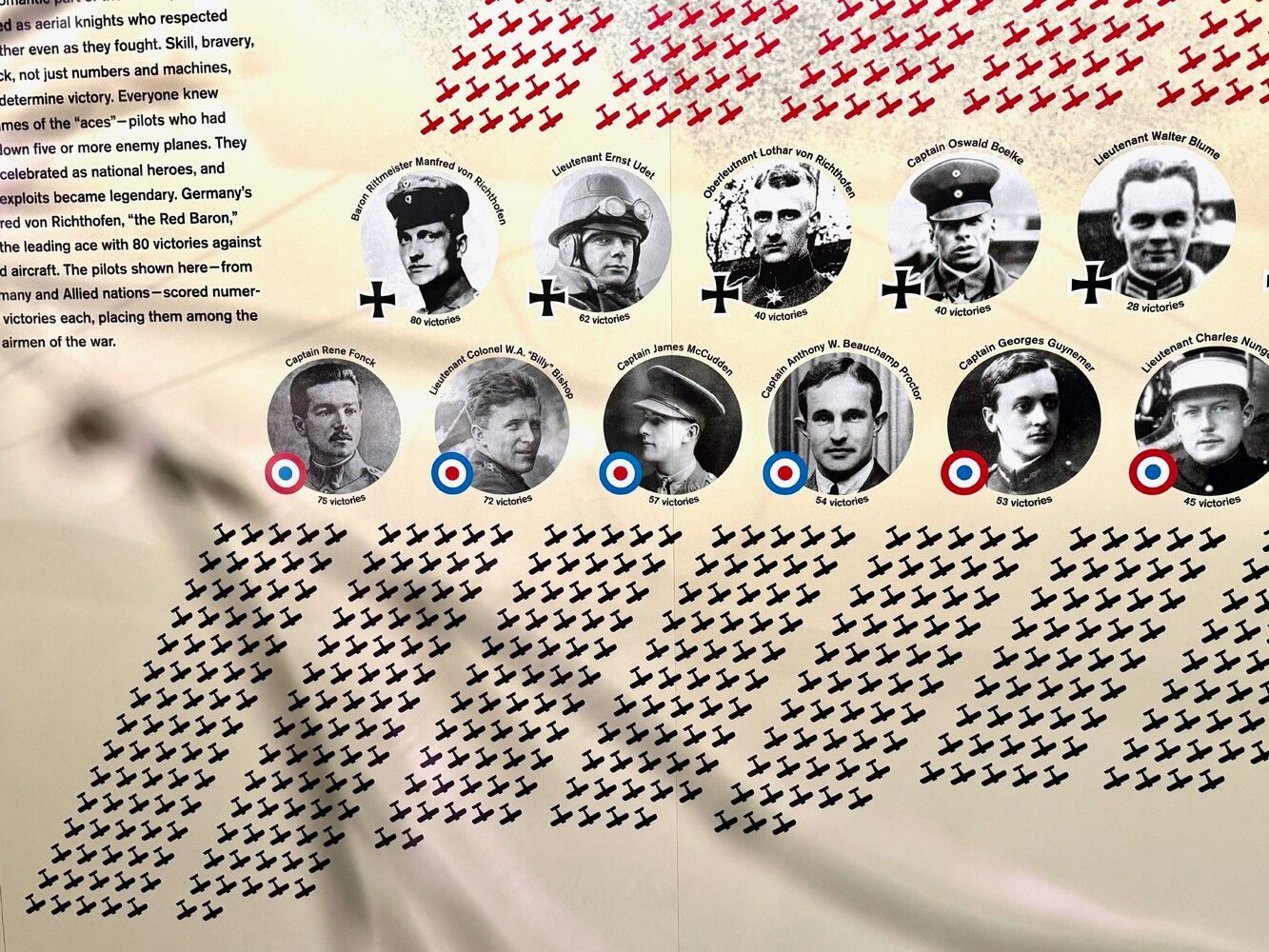
What looks like a scoreboard also tells a story about survival, probability, and the cost of fixation.
At first glance, it reads like a scoreboard. But that display led me into a deeper study of early fighter pilot history and doctrine. What I discovered surprised me. The core combat principles developed by men flying wood-and-fabric biplanes over Europe are still taught to pilots flying supersonic aircraft today. The machines changed. The physics changed. The weapons changed. The human problem did not.
The Technology That Changed Everything
Early in the war, airplanes were observers. Pilots sometimes carried pistols or rifles, but aerial combat did not yet exist in the modern sense. That shifted when French aviator Roland Garros mounted metal deflector plates onto his propeller, allowing a machine gun to fire forward through spinning blades. When his aircraft was captured in 1915, Anthony Fokker refined the idea into a synchronized firing mechanism. Overnight, airplanes stopped observing war. They began fighting it.
Technology created advantage. It also created fear. Flying observers suddenly found themselves obsolete. What had been reconnaissance became lethal vulnerability. A technological shift did not simply improve performance. It changed the survival equation.
We feel similar tension today with artificial intelligence. Technological leaps create opportunity and anxiety at the same time. They expand capability while threatening jobs and identity. In 1915, innovation did not just change machines. It forced humans to adapt or perish.
The Birth of Target Fixation
Once pilots could aim by pointing the aircraft itself, success became seductively simple: get behind the enemy, stay on target, finish the kill. And pilots began dying in alarming numbers.
Average life expectancy for a new pilot at the front could be measured in weeks. Some survived only a handful of combat hours. To be considered an "ace" required five confirmed victories, a statistical improbability for most.
They chased too long. Too low. Too far. They became fixated.
History strongly suggests that even von Richthofen himself died pursuing a target across enemy lines at dangerously low altitude. He did not forget how to fly. He narrowed his awareness.
Aviation gave this failure a name: target fixation.
What the Best Pilots Learned
Von Richthofen's effectiveness did not come from reckless aggression. It came from disciplined doctrine:
- Climb high.
- Approach unseen.
- Attack quickly.
- Disengage immediately.
Von Richthofen commanded Jagdgeschwader 1 (JG 1), the German fighter wing that became known to the Allies as the "Flying Circus" for its mobility along the front and its brightly painted aircraft. Its effectiveness did not come from reckless aggression. It came from disciplined doctrine.
His Flying Circus became deadly not because it chased relentlessly, but because it preserved advantage. They hunted from superior position, struck with precision, and disengaged the moment conditions shifted.
The short-lived pilots were often adrenaline-driven, aggressive, and emotionally reactive. The most effective pilots were calm, disciplined, situationally aware, and detached enough to disengage. They were intensely engaged, but not psychologically grasping for the kill.
They learned something counterintuitive: You cannot force victory. You create conditions where victory becomes possible.
As mastery increases, effort decreases, awareness widens, urgency softens, and clarity improves. Action becomes precise because the mind is quiet.
Today we call this flow, the state where skill and challenge meet, internal chatter drops away, and perception sharpens. Even modern films like F1 with Brad Pitt explore this psychological edge. Fighter pilots have trained for it for more than a century.
This is what 10,000 hours was always about. Not becoming the best. Building muscle memory so that execution no longer consumes attention. A novice pilot thinks about flying. An experienced pilot flies instinctively and thinks about the battle.
Mastery restores awareness. And awareness prevents fixation.
The Organizational Parallel
The same psychological pattern appears in modern leadership. Goal fixation narrows perception. Every generation in today's workforce has its examples.
In the early 2000s, Enron pursued performance metrics that eclipsed reality. At Wells Fargo, aggressive sales targets led to millions of unauthorized accounts. More recently, Sam Bankman-Fried at FTX pursued rapid dominance while governance discipline eroded. Elizabeth Holmes at Theranos became attached to a revolutionary vision that outpaced technical reality.
None of these leaders began intending collapse. They crashed while pursuing success. Just like inexperienced pilots chasing a perfect firing solution.
The Responsibility of Leadership
Every leader faces moments when the goal stops being strategic and becomes personal. The deal that must close. The transformation that must succeed. The strategy that must prove correct.
That is when awareness begins to shrink. Dissent feels threatening. Warning signals feel inconvenient. Disengagement feels like failure.
But fighter pilots learned a discipline leaders rarely articulate: Disengaging is not quitting. It is preserving altitude.
The responsibility of leadership is not merely achieving outcomes. It is maintaining awareness while pursuing them.
Organizations rarely fail from lack of effort. They fail when leaders become so committed to the target that they stop seeing the sky around them.
The moment success becomes identity, awareness becomes the first casualty.