
Love and Steel
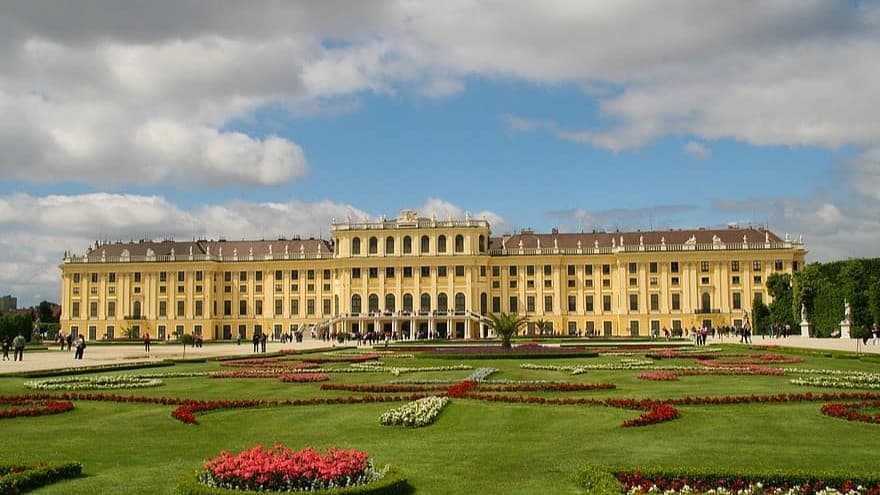
The legacy of Maria Theresa at Schönbrunn Palace.
Love and Steel
The legacy of Maria Theresa at Schönbrunn Palace.
Yesterday, I was reflecting on Franz Joseph I, Austria's long-reigning emperor. But today, my focus shifted entirely.
Visiting Schönbrunn Palace, the summer home of the Habsburg dynasty with its 1,441 rooms, I expected grandeur: extravagant halls, opulent decoration, and gold-leafed ceilings that spoke of royal privilege. And I was not disappointed. After all, it has been called the Versailles of Austria, a Baroque jewel meant to impress Europe with the scale of Habsburg power.
But here's the surprise. Even as I start to write this, sitting in the gift shop at the end of the tour, what has stayed with me most is not the gilded walls or endless rooms — but the story of Maria Theresa (1717–1780), Archduchess of Austria, Holy Roman Empress, and ruler for 40 years (1740–1780).
When we think of impactful female leaders, we might think of Queen Elizabeth II, remembered for her steadiness; Margaret Thatcher, known for her toughness; or Mother Teresa, revered for her compassion. Two centuries earlier, Maria Theresa seemed to embody all of these — courageous in crisis, compassionate in reform, and always leading with a clear vision for the future. She carried an empire through challenge after challenge.
A Life of Many Roles
Maria Theresa's story is remarkable not just because she ruled for forty years, but because of the breadth of roles she carried at once. She was a stateswoman, a reformer, a wife deeply devoted to her husband, and a mother of sixteen children. Yes — sixteen. Eleven survived into adulthood, and one of them — her youngest daughter — would become world-famous as Marie Antoinette, Queen of France.
Maria Theresa's reign stretched from 1740 to 1780, making her one of the most significant rulers of 18th-century Europe. She inherited a shaky throne at twenty-three, turned doubters into allies, reformed education and taxation, and weathered wars that would have undone weaker monarchs. She was both feared and admired in her own time — and centuries later, she still stands as one of the most formidable leaders in European history.
Proving Herself in Crisis
She had to prove her resolve from the very beginning. At just 23 years old, she inherited the throne after her father's death. Many in Europe doubted that a young woman could govern — and almost immediately, Frederick the Great of Prussia invaded Silesia, a wealthy province of Austria prized for its fertile land, textile industry, and rich mines. It was a defining test.
Maria Theresa rode to Pressburg (today's Bratislava) to face the Hungarian Diet — the parliament of nobles whose support she desperately needed. Clad in a black mourning dress and carrying her infant son, she appealed not only as their sovereign but as a grieving daughter and mother defending her child's inheritance. The chamber was moved. The nobles rose, drew their swords, and pledged: "Vitam et sanguinem pro rege nostro!" — "Our lives and blood for our king!"
Austria never regained Silesia, but Maria Theresa had won something more important: legitimacy.
And here's the deeper leadership lesson. It is okay for leaders to seek help and support. I've worked with leaders who felt they always had to be the smartest person in the room, as if that were their role. I've seen leaders who were condescending to their direct reports publicly, in front of their teams, or who dictated commands without input — fearing that asking too many questions might make them appear weak. Ironically, the refusal to be vulnerable does not strengthen a leader — it weakens them.
Maria Theresa understood this. Standing before seasoned nobles who had far more years of experience than she did, she showed authenticity and vulnerability. She didn't try to dominate them with clever words or rigid command. She asked for help, openly and courageously. And because she did, she built alignment. Those men pledged their "lives and blood" not to a cold institution, but to a living leader they trusted.
This is what leadership alignment really looks like. It's when people see their leader's intent so clearly that they choose to give their best — not out of fear or compliance, but out of conviction. Alignment is what happens when trust, purpose, and vulnerability meet in the same moment. It is no longer about a job description or a title; it is about a shared cause. Maria Theresa left that chamber with more than swords raised in loyalty — she left with hearts aligned to the survival of the realm. And that alignment carried her through decades of crisis.
It's also worth noting that alignment doesn't mean we will always agree with a decision. It means that once the decision is made, we move forward as if it were our own — taking responsibility to execute it, even if behind closed doors we might have preferred a different direction. Of course, alignment is not blind obedience. If a decision is illegal, immoral, or unethical, leaders still have choices to make about whether and how they can support it. But in most cases, alignment is the glue that carries organizations through turbulence: a commitment to move forward together, even when perspectives differ.
Investing Beyond the Battlefield
The wars never stopped, but she refused to be defined only by them. Maria Theresa pressed ahead with reforms that would outlast the battlefield. She centralized administration, modernized taxation, and in 1774 made primary education compulsory for both boys and girls — an astonishing leap for its time. In an age when most rulers thought only of armies and treaties, she thought of classrooms. Great leaders invest in the future — for generations they may never meet.
Her taxation reforms were just as bold. For the first time, nobles were taxed alongside commoners — an unpopular move, but one that strengthened the foundation of the empire. They were in it together — each carrying their fair share in support of a vision larger than any one person. Maria Theresa knew survival required collective investment — not just from the poor or the soldiers, but from the privileged as well.
That same principle holds true in organizations today. Successful cultures are those where ownership and accountability run through every level — not concentrated only at the top with executives, and not neglected at the bottom among frontline employees. When leaders build this kind of alignment, vision outweighs privilege. They prepare people not only for the immediate demands of today but for the challenges of tomorrow.
That's why the most enduring organizations, like the most enduring empires, invest ahead of the curve. Nvidia, for example, didn't design its chips only for run-of-the-mill computing needs. Years before artificial intelligence became mainstream, it was already investing in parallel processing technology — building capacity for the future. When the AI revolution arrived, Nvidia wasn't scrambling to catch up. It was ready, because it had invested in the "classrooms" of tomorrow.
Today, the payoff is clear. As of late August 2025, Nvidia is valued at roughly $4.2 to $4.4 trillion — making it the most valuable company in the world.
Maria Theresa's reforms remind us that true leadership isn't only about weathering the present storm; it's about planting seeds for forests you may never see.
Courage in the Face of Fear
Smallpox was the great terror of the 18th century. It scarred faces, devastated families, and killed millions. In Maria Theresa's own family, she had seen it take her beloved daughter Maria Josepha. Many feared inoculation — the practice was new, controversial, and dangerous. For a ruler, promoting it could spark distrust or even rebellion.
Maria Theresa chose to act anyway. She invited a Dutch physician, Jan Ingenhousz, to Vienna to perform the procedure. But she didn't begin with the public — she began with her own household. She ordered her younger children inoculated first, knowing that if it failed, she could lose them. It was an act of vulnerability, but also of conviction. When they survived, she extended inoculation more widely across the empire, saving countless lives.
What's striking is not just that she adopted a medical breakthrough — but how she did it. Maria Theresa didn't hide behind decrees or force compliance. She led with personal risk, showing her people that she would not ask them to walk a path she was unwilling to walk herself.
History, in fact, does repeat itself. During COVID, the most effective leaders weren't those who waited for perfect clarity. They were the ones who moved quickly to protect their employees, even when the costs were high and the data incomplete. They acted with courage — shifting to remote work, investing in safety measures, and taking precautions early, before they were universally accepted. Trust didn't come from waiting until the storm had passed. It came from being willing to go first into the unknown.
Maria Theresa's choice reminds us that leadership is not only about vision. It is about credibility. And credibility is earned when leaders are willing to go first and carry the risk themselves.
Grief and Responsibility
Yet even Maria Theresa was not immune to heartbreak. After 29 years of marriage, her husband Franz I Stephen died suddenly in 1765. She was devastated. For the rest of her life — 15 long years — she wore black mourning clothes, slept in a simple iron bed, and never remarried. In her private chambers she was a grieving widow; in her public life, she was still the ruler of a vast empire.
But it was not only her husband she lost. As a mother, she endured the agony of burying several of her own children. Three died in childhood, and her daughter Maria Josepha succumbed to smallpox as a teenager. Each of these losses cut deeply. Yet through it all, she continued to shoulder the weight of leadership.
What is remarkable is not that she grieved, but that she continued to lead. She carried sorrow in one hand, and responsibility in the other. She did not abandon her duties; she governed, negotiated, and reformed through her losses. Her empire saw not only her grief but also her resilience.
This tension — grief and responsibility side by side — is one that leaders still face today. I work with organizations going through painful restructuring, where leaders must lay off colleagues they care about and then guide those who remain through turbulent transitions. These leaders experience their own grief, even as they shoulder the responsibility of moving the organization forward.
In such seasons, empathy matters. How leaders treat those who leave — making the transition as humane and respectful as possible — leaves a lasting imprint on culture. Equally important is how leaders guide those who remain. People will grieve at different speeds. Productivity may dip. Energy may falter. And leaders who frame expectations with "should" language — "We should be over this by now," or "Our productivity should match where it was before" — risk undermining morale. What feels like motivation often lands as dismissal of reality.
Maria Theresa's example reframes success. After loss, the goal is not to pretend nothing has changed. The goal is to acknowledge the weight of what has happened while still providing clarity of direction and vision for the way forward. Success in such times is not measured only in output, but in resilience, trust, and the shared belief that a new chapter is possible.
Closing Reflection
Walking through Schönbrunn Palace, I came looking for grandeur — the gold, the opulence, the extravagance of the Habsburg dynasty. I found all of that. But what surprised me most was not the palace. It was the woman who defined it.
Maria Theresa's leadership endures because she held paradoxes together: fierce in crisis, yet compassionate in reform; vulnerable in her appeals, yet unyielding in her direction; grieving in private, yet steady in public. She carried love and steel in the same hand — and she carried them for forty years of rule.
When we think of impactful leaders, we often separate toughness from tenderness. Queen Elizabeth II embodied constancy and steadiness; Margaret Thatcher embodied steel; Mother Teresa embodied compassion. Maria Theresa, centuries earlier, embodied all of these. And that, perhaps, is her greatest legacy: a reminder that leadership does not live at the extremes. It lives in the tension — in the courage to act, the empathy to care, and the vision to prepare for a future beyond ourselves.