
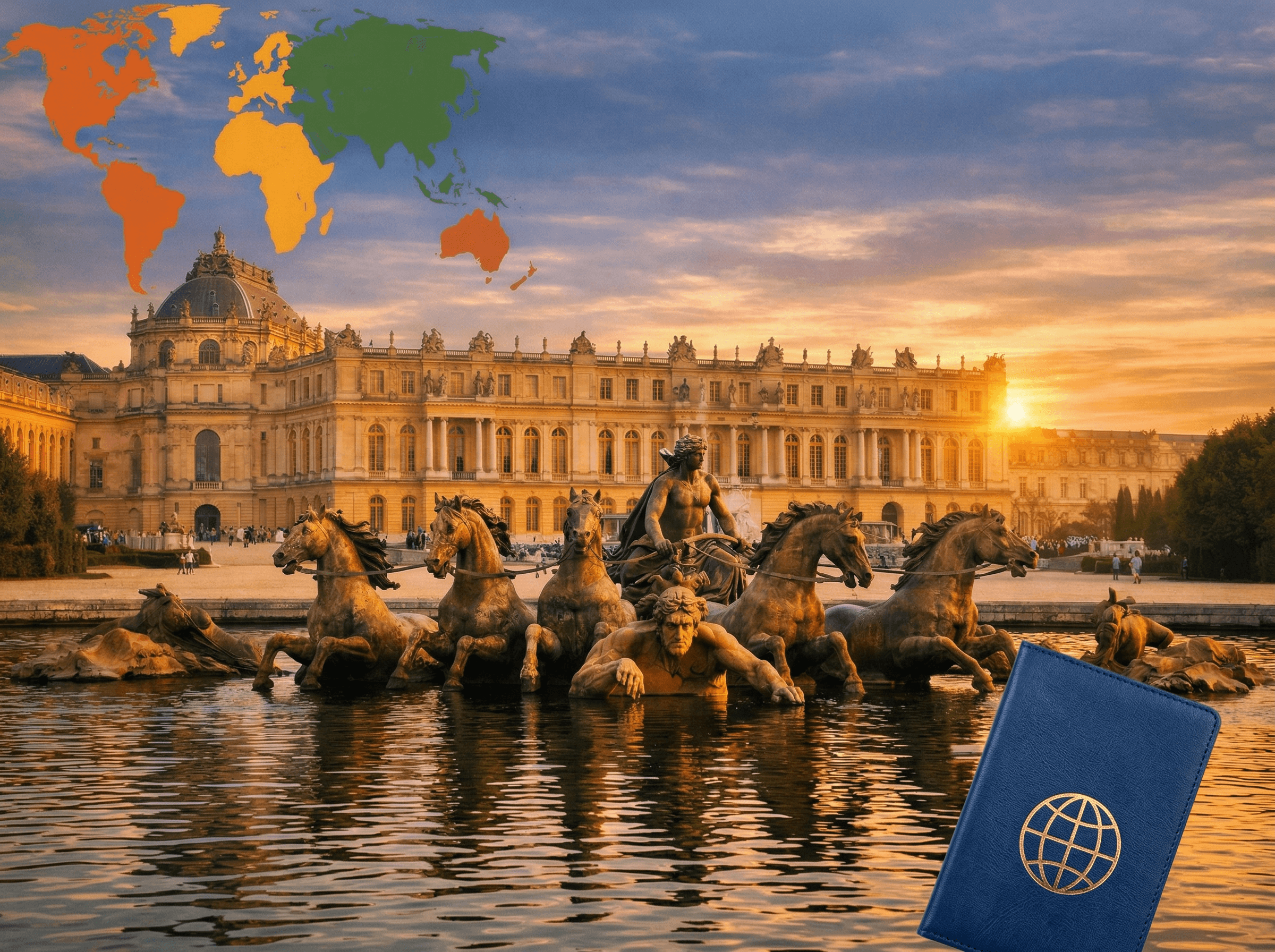
Paris Edition: Versailles & the Illusion of Power
Walking through Versailles reveals how mirrors can reflect power back to itself while hiding reality.
Paris Edition: Versailles & the Illusion of Power
Walking through Versailles reveals how mirrors can reflect power back to itself while hiding reality.
This reflection is part of my ongoing Leadership Lessons Without Borders series, where travel becomes a lens for examining leadership, culture, and power. This Paris edition begins at Versailles.
Walking through Versailles this week felt both familiar and new.
Familiar in its scale and grandeur, which I remembered from hours spent wandering the gardens years ago, baguette au fromage in hand.
New in how differently the palace interior landed after years of working with leaders and organizations.
I had been here decades ago while studying French, but I never toured the palace itself. I remember promising I'd return someday. General MacArthur–style. 😄
As I moved through the corridors, I was aware that these were the same halls once occupied by figures I had studied in world history. Not abstractions from textbooks, but real people whose decisions shaped nations. Their presence still seems to linger in the architecture itself.
Consolidating Power
Versailles was designed by Louis XIV as a deliberate act of power consolidation.
He required the French nobility to live at Versailles, close to him. Proximity was not courtesy. It was control. Anyone plotting against him would be doing so under his watchful eye.
It was a masterful political move.
Louis also worked intentionally to elevate himself beyond the role of ruler. He came to be known as The Sun King, aligning his image with Apollo and placing himself symbolically at the center of France, just as the sun sat at the center of the universe.
Other 20th- and 21st-century authoritarian leaders would later adopt similar strategies, using scale, spectacle, and symbolism to cast themselves as larger than life.
Touring the King's State Apartments makes the message unmistakable. The rooms leading toward his chambers are themed around Greek gods. You don't need to know the mythology to feel the intent.
Apollo Room (Salon d'Apollon): Louis XIV aligned himself with Apollo, framing his authority as natural, central, and unquestionable.
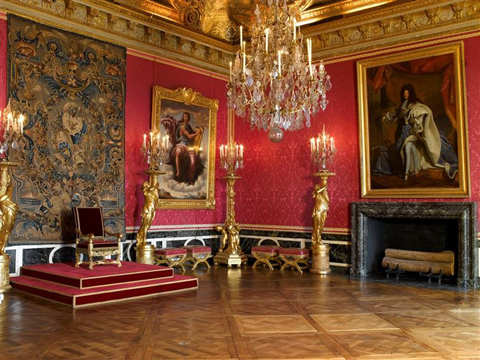
The architecture speaks before a word is spoken.
Power here is not merely political. It is staged to feel inevitable.
In Louis's construction, he was not simply the head of the state.
He was the state.
Arriving at the Hall of Mirrors
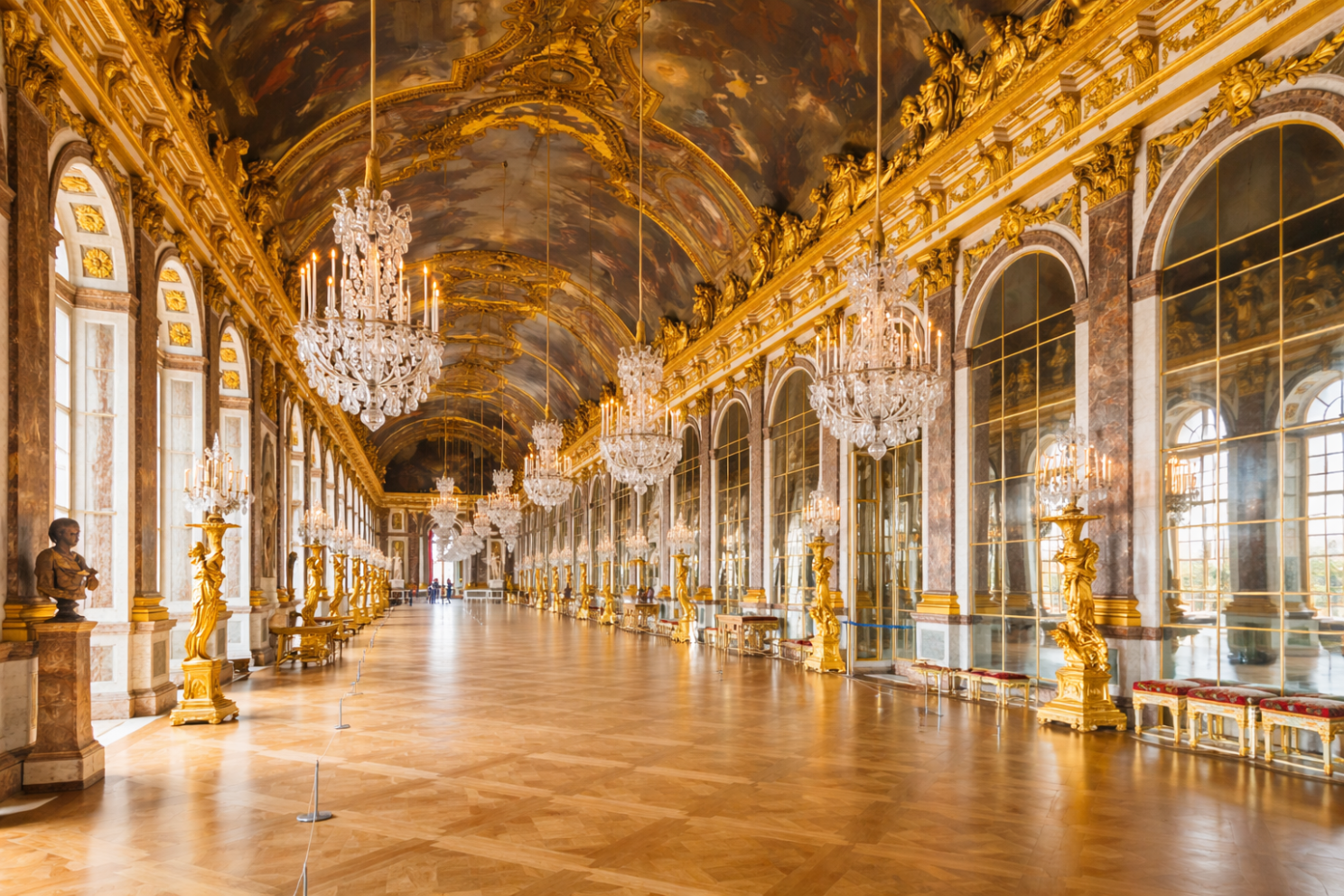
After passing through these rooms, you arrive at the Hall of Mirrors.
It is the symbolic and political heart of the palace.
This room mattered. Foreign dignitaries were received here. Royal ceremonies reinforced authority here. Military victories were celebrated here. And centuries later, the Treaty of Versailles would be signed here, reshaping Europe after World War I.
Power wanted this backdrop.
The hall stretches nearly 240 feet. On one side, massive windows open to the gardens. On the other, hundreds of mirrors reflect that light endlessly. Everywhere you turn, there is brightness, multiplication, amplification.
This was not decoration.
It was psychology.
The mirrors created the experience of permanence and inevitability. Grandeur reflected back on itself.
And yet, the lesson becomes clearest right here.
Versailles dazzled.
But beneath the gold lay strain, resentment, and distance from ordinary life. The illusion of stability masked a nation quietly coming apart.
The mirrors did not strengthen leadership.
They protected its image.
They reflected power back to itself while hiding the economic and human realities unfolding beyond the palace walls.
What looked like permanence was performance.
What felt like order was insulation.
In doing so, Versailles did not merely overlook reality. It separated leadership from it. And that separation quietly sowed the seeds of revolution.
The cost would not be abstract. It would be personal and brutal.
Louis XVI and Marie Antoinette would ultimately pay for that disconnect with their lives.
Back to the Mirrors
Which brings me back to walking through the Hall of Mirrors.
It is breathtaking. It is deeply instructive.
Mirrors show leaders what success looks like. But they do not test assumptions or tell the truth about lived experience. They only reflect what is presented.
Versailles did not fall because it lacked intelligence or effort. It fell because leadership lost contact with reality.
The modern version is familiar.
Leaders are surrounded by signs of success: dashboards, engagement scores, positive feedback, polished presentations. Useful, yes. Sufficient, no.
"Culture rarely breaks where leaders are looking. It breaks where they stop listening.
Early warning signs are simple:
- People saying what leaders want to hear
- Concerns being discussed after meetings instead of during them
- Discomfort being dismissed as negativity
The antidote is practical.
"Healthy leaders shorten the distance to reality. They stay close to the work, make disagreement safe, and treat uncomfortable feedback as information, not threat.
That is the lesson of the mirrors.
They do not destroy organizations. They delay the moment leaders realize something is wrong.
And by the time reality forces its way back in, the cost is always higher.